The Ghost in the Studio
Photos by Ryan Murphy
Words by Mark Braddock
A photographer enters a studio without context.
The images he makes become a mirror.
I WAS GOING to start this with someone else’s words—a quote. It is an old habit. At Block I have spent much of my life shaping other people’s stories. Finding the words for someone else to stand behind. There is safety in that. If the words aren’t mine, neither is the risk.
But beginning this piece that way would have been another place to hide.
For most of my career I separated my creative life into two metaphoric rooms. There was the public work—Block—where creativity is commercial and made for others. Work that can be judged. Accepted. Rejected. Work that is never entirely about me.
And then there was the other work.
The private work.
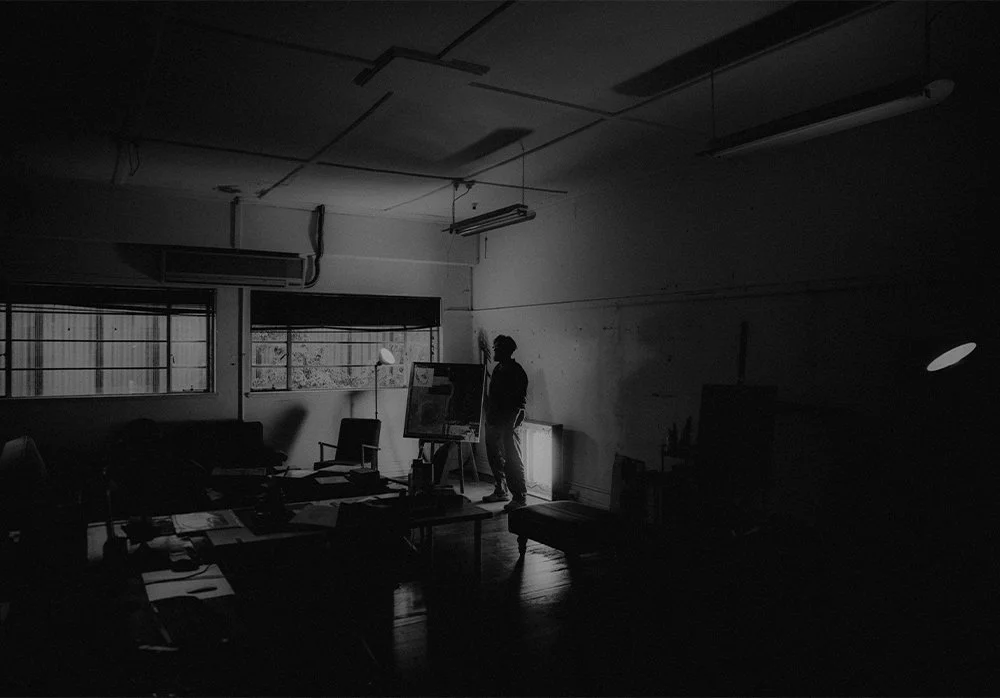
During Covid that particular metaphoric room became literal.
A studio. A door. Locked.
I did not invite many people in. Not because the room was precious. Because the work was personal. If the work was rejected it would not feel like criticism of an idea or a campaign.
It would feel like criticism of me.
So the door stayed closed.
Over time I built a story to explain it. That what happened in that room was not really art. That calling myself an artist required a seriousness I had not earned. That keeping my commercial creativity and whatever happened in that studio separate was sensible.
It was a tidy story.
It was also, as tidy stories tend to be, complete bullshit.
Which is how I now find myself sitting in front of a series of photographs of that room.
Not photographs I took.
Photographs of the studio.
Photographs of my life scattered through it.
Evidence.
Departing / Arriving or vice versa?
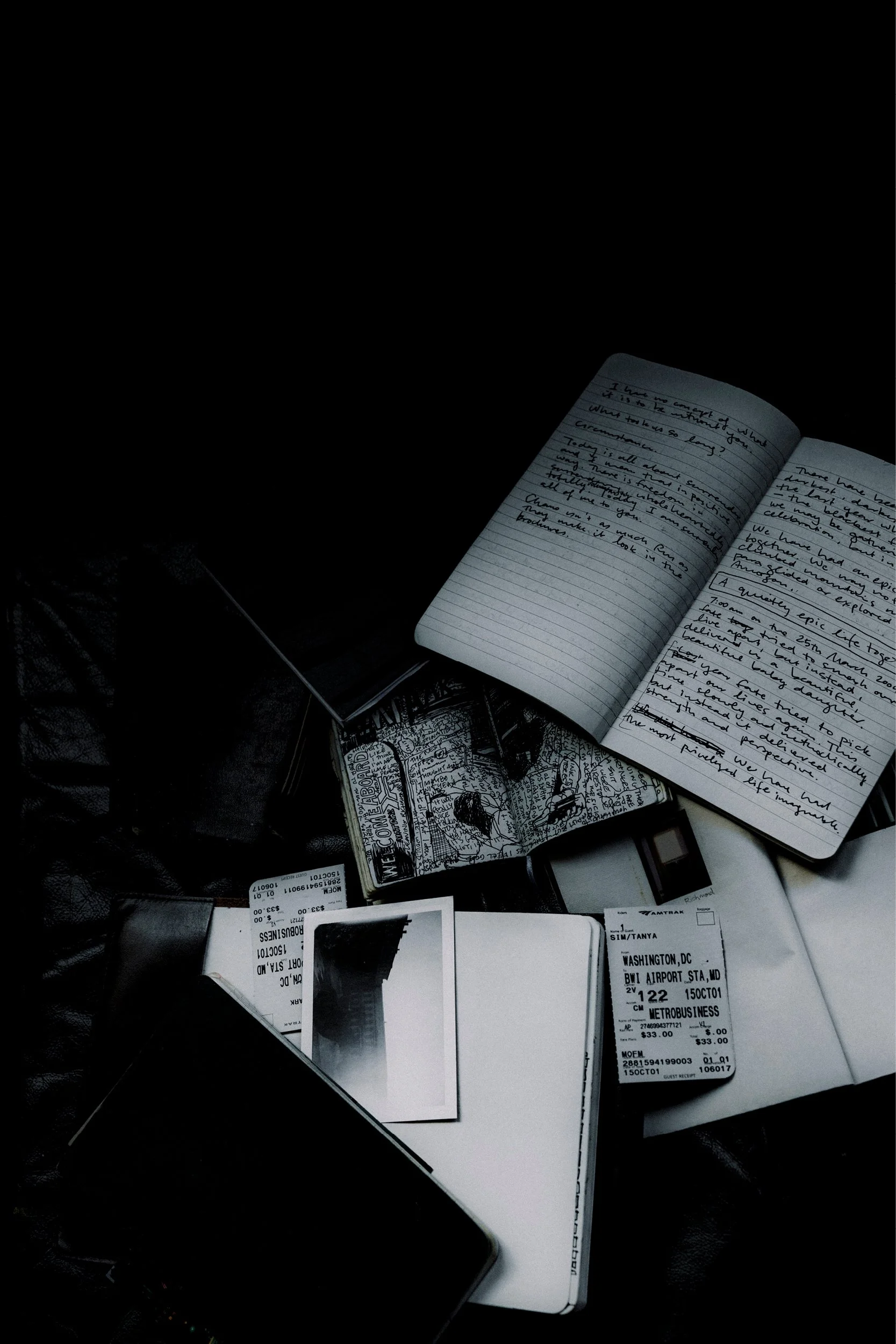
Open on a black-and-white close-up of what appears to be a random selection of old sketchbooks.
The monochrome deepens the nostalgia.
The books themselves appear unremarkable. Just another pile among many. But the poignancy of this particular selection could not be greater.
They sit like tarot cards laid on a table. The cards themselves neutral. The interpretation entirely mine.
In one sketchbook there is a doodle made on board an Amtrak train leaving Richmond, Virginia, bound for BWI airport to begin the journey home. Tucked between the pages are the Amtrak tickets from that moment.
Thirty-three dollars.
That was all it cost to take the first step home.
Or the last.
It was the moment our itinerant twenties ended and Block—or at least the idea of Block—began to take shape as our future.
The long way home to nesting. To permanence. To real adulthood. A mortgage. Children. A business that began as an experiment and slowly became the defining structure of our lives.
And then, in another sketchbook in the same frame, a different page.
The draft of my wedding speech written the night before in Scotland. Our second home. Two children already in the world—our seven-year-old flower girl and our three-year-old ring bearer.
The page itself equal parts whisky and tear stained.
If I had been asked to find two pages among the scores of sketchbooks scattered through that room that marked the arc of a life, I doubt I could have chosen better.
Quite an opening.
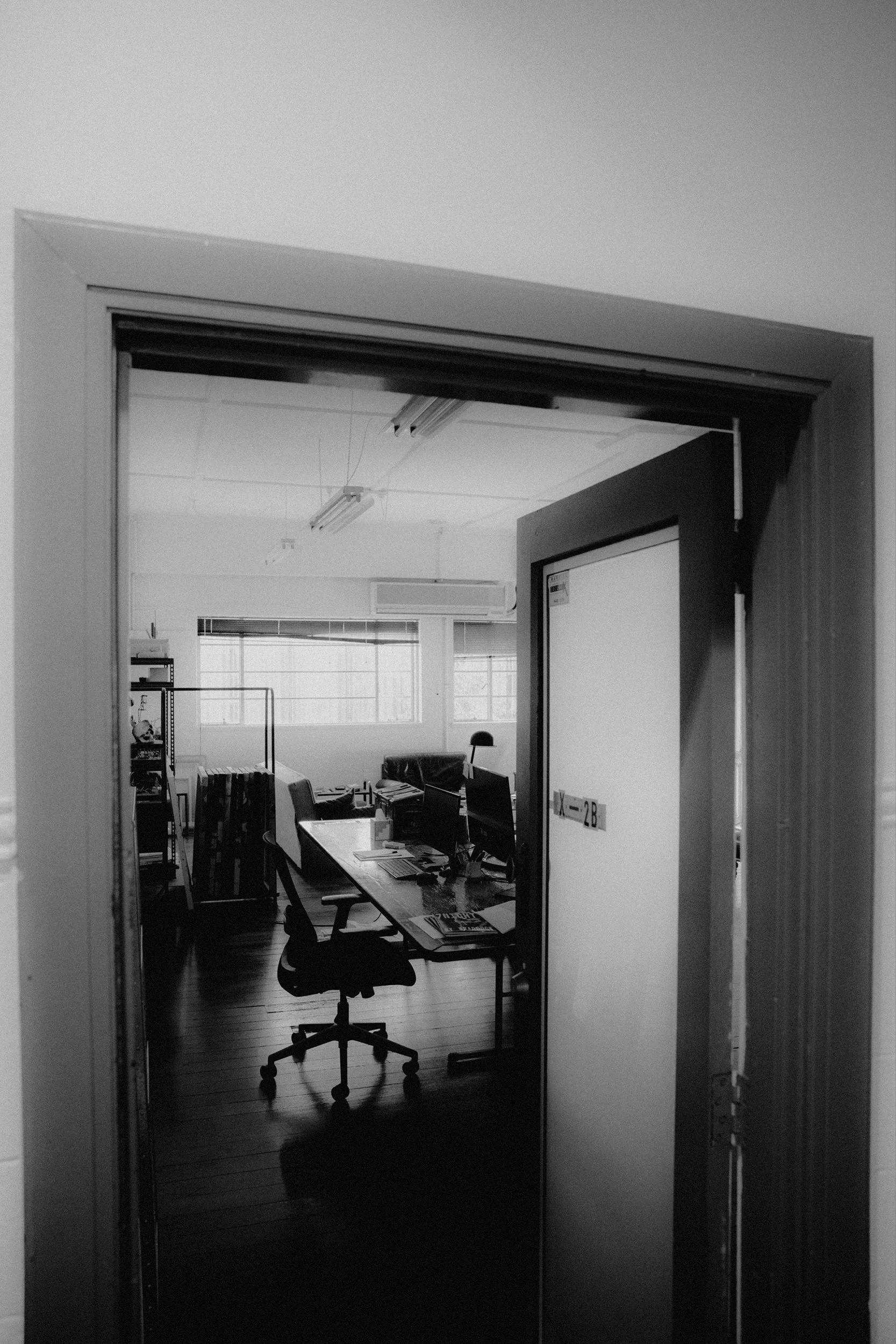
I had not taken the photographs.
A stranger had walked into the studio and shot whatever he found.
The stranger was photographer Ryan Murphy.
The brief—if you could call it that—was simple.
I would not be there.
I would not explain anything.
Ryan would walk through the space and photograph whatever he found.
Nothing arranged. Nothing explained.
Just evidence.
At the time my reaction had been simple.
Dread.
Why surrender control of the one place I had always controlled completely?
Why let someone wander through the most private landscape of my creative life?
Obviously, it wasn’t my idea.
But the people suggesting it were people I respect.
They told me to get out of my own way.
So I did.
Ryan spent a few hours in the studio.
And now the photographs sit in front of me.
The Map
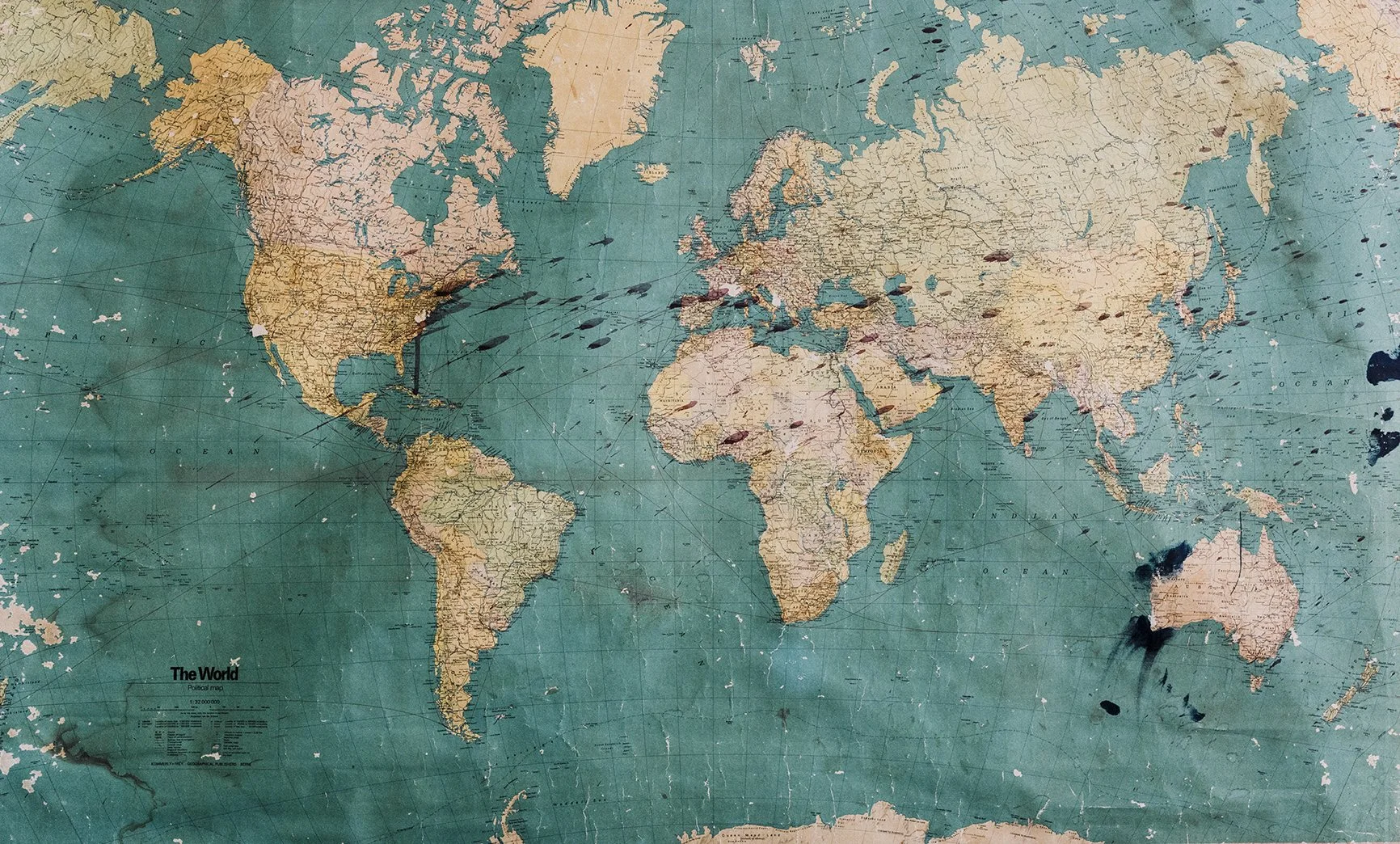
Cut to another close-up—this time of the world map that hung on the wall of my childhood bedroom in City Beach.
The one bordered with all the flags of all the countries, as they were back then—in the 70s anyway.
I loved that map.
Or more precisely, I loved those flags. Their beautiful simplicity. Tiny abstract expressions of identity arranged around what appeared to be the vastness of the whole wide world.
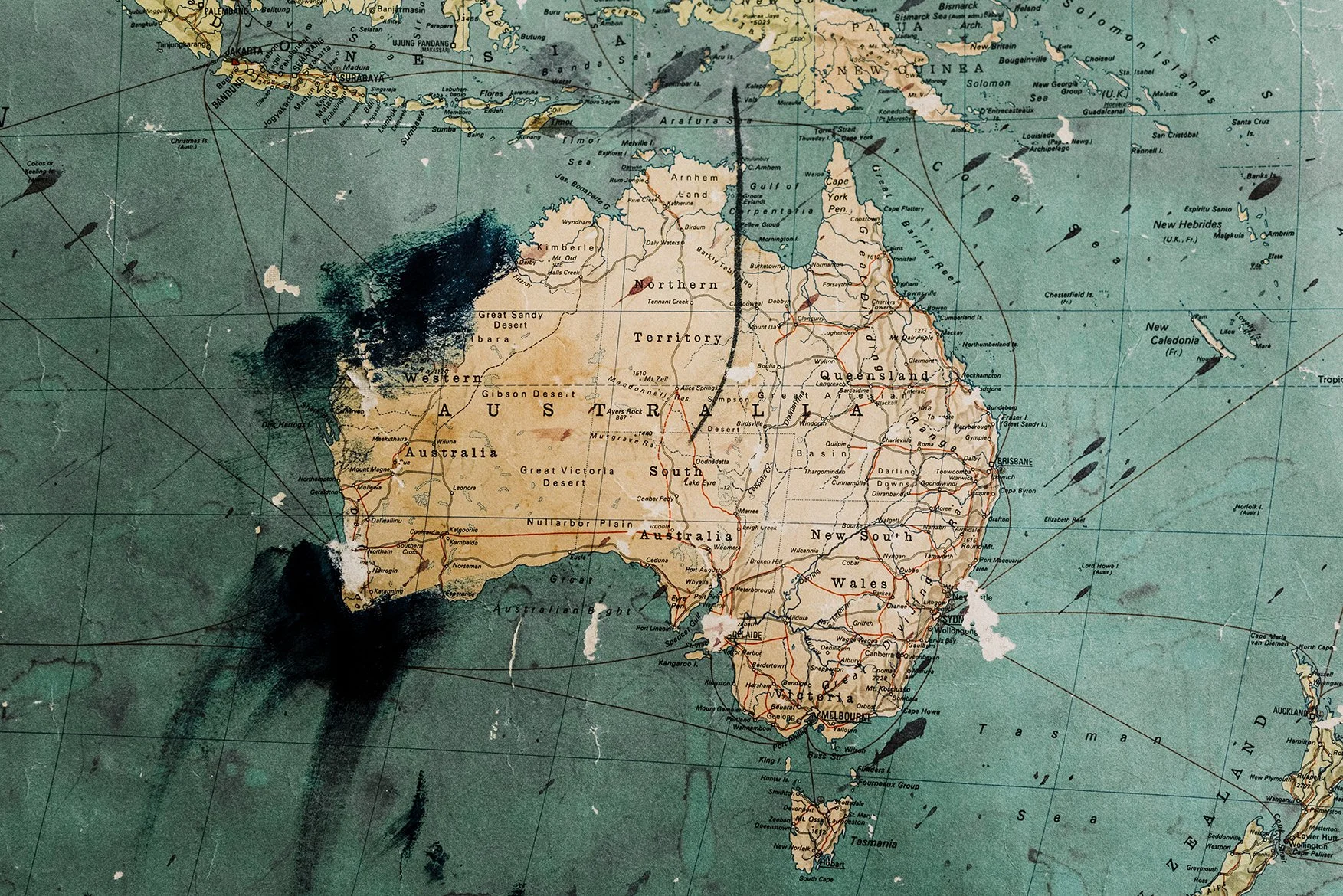
Zoom in to the lower right-hand corner of the map.
Australia. WA. The western edge of nowhere, rendered in British Empire pink.
Now splattered and smudged with paint from countless projects that have taken place nearby.
Surely there is no more apt metaphor for what this place means to me.
This was where the world began for me.
And it is where I returned.
The Ticket Out
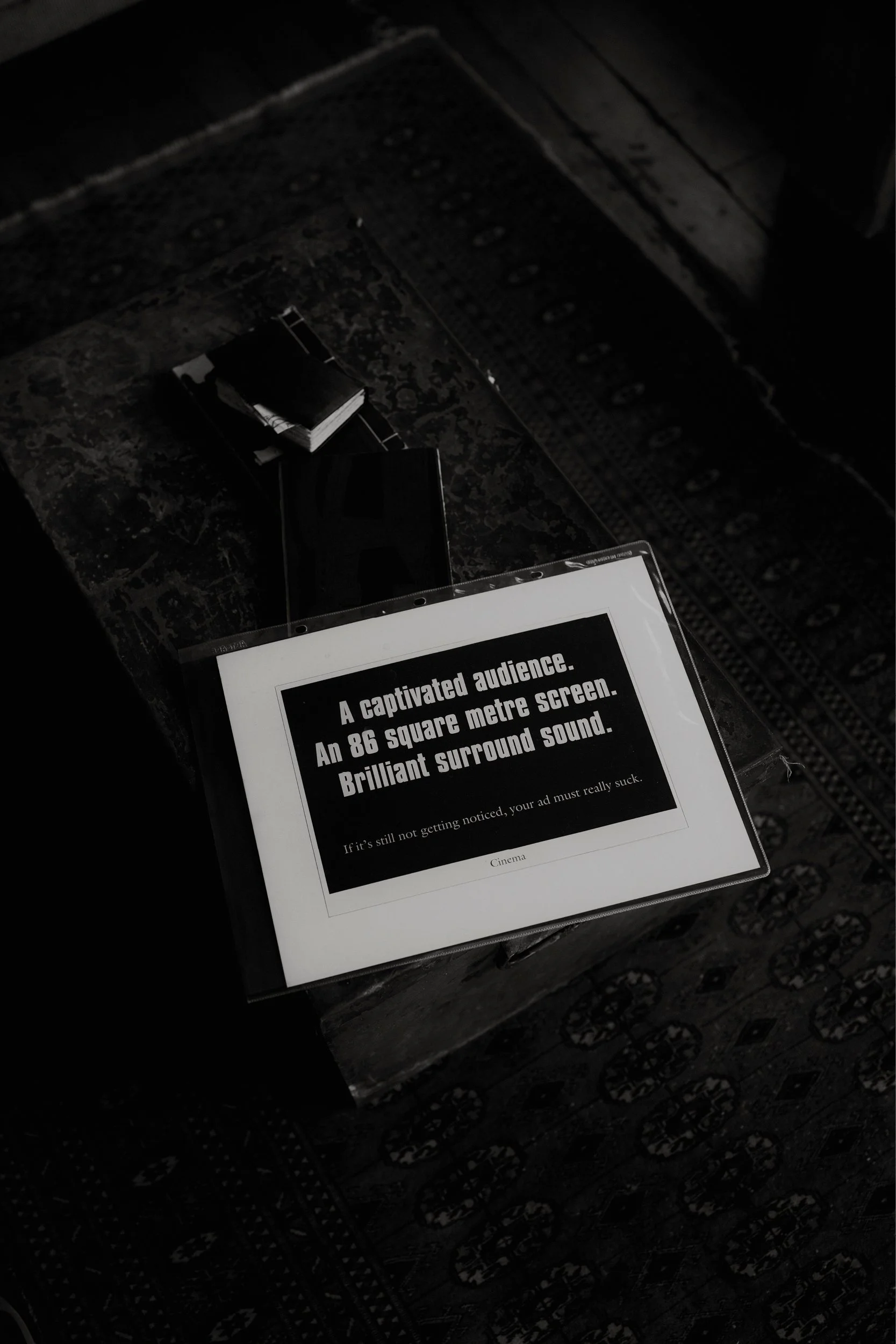
Cut to an A4 laser print from 1995. A page from an old portfolio.
The ad that was, quite literally, my ticket out of here.
The brief was simple. Make an ad to sell cinema as an advertising medium. A4. Black and white. Val Morgan would send the winners to Cannes to represent Australia in the first Young Lions competition.
And that was that.
Six weeks later I was gone.
As I lay these photographs out and attempt to reconstruct a narrative from them—like a detective poring over crime scene images—I begin to sense something strange.
It is as if I am a ghost in the studio now—wandering through a place that once felt entirely my own.
Or perhaps more accurately, several ghosts.
Different versions.
Different moments.
All occupying the same room.
Perhaps that is too many analogies.
But indulge me.
The Mirrors
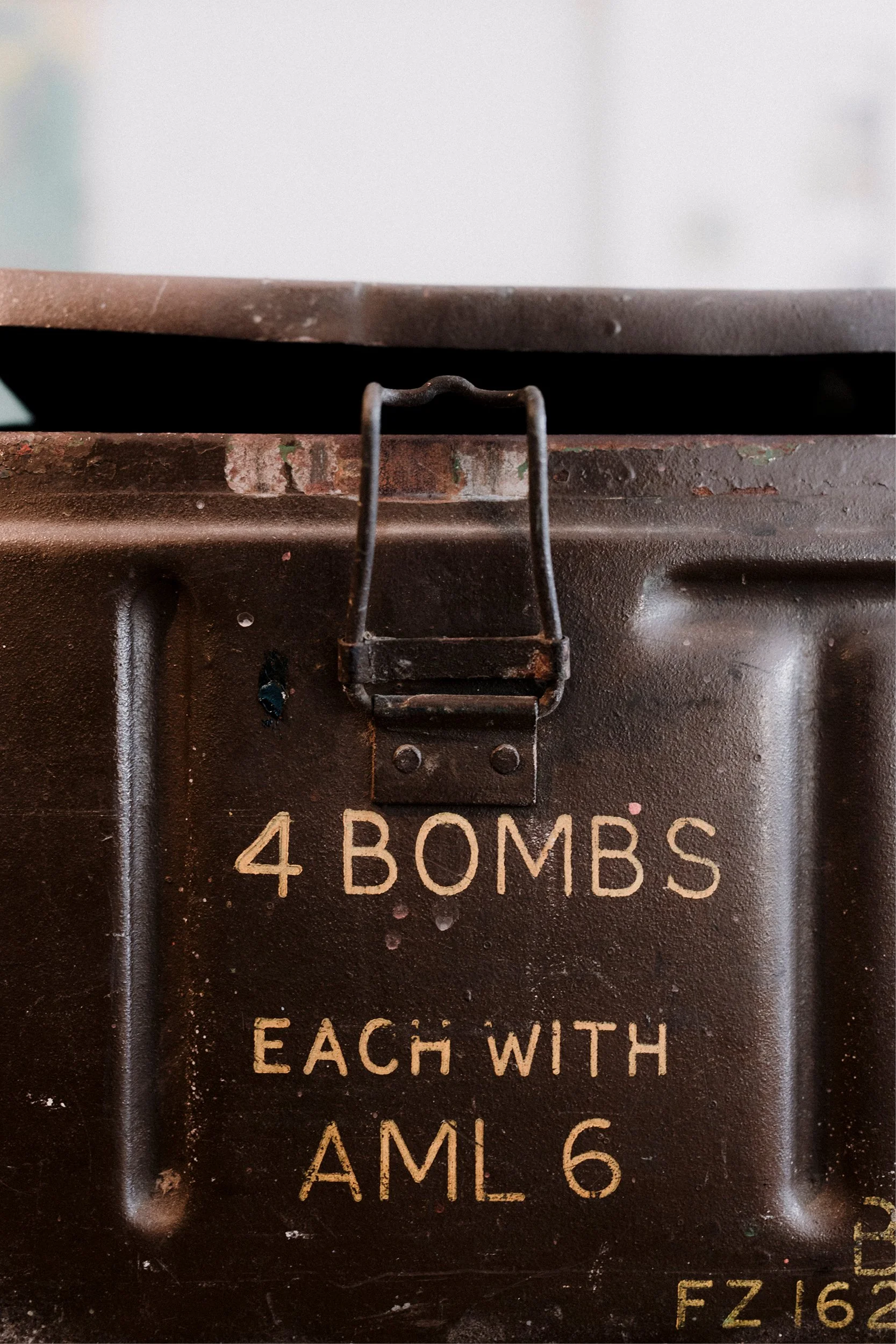
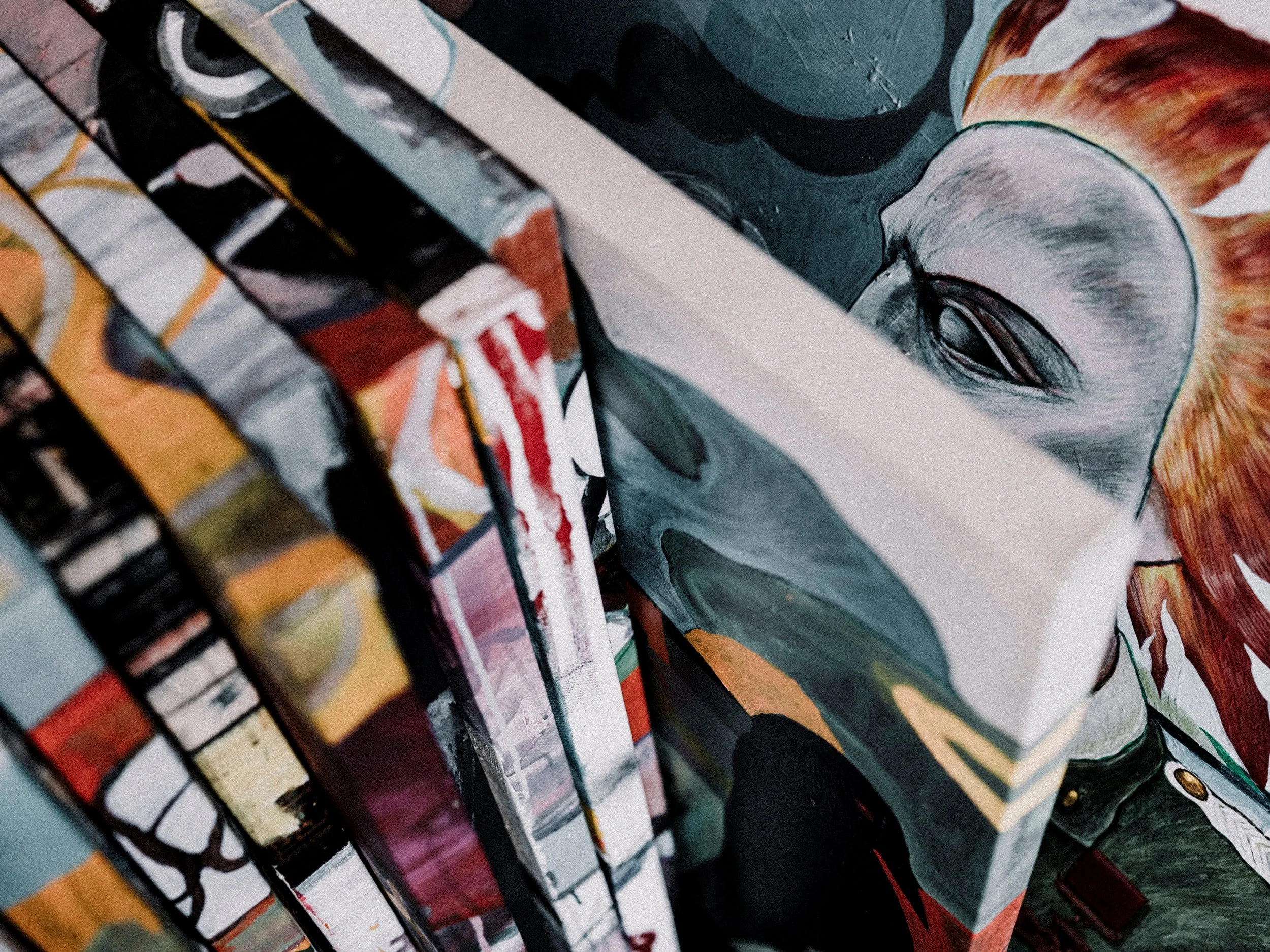
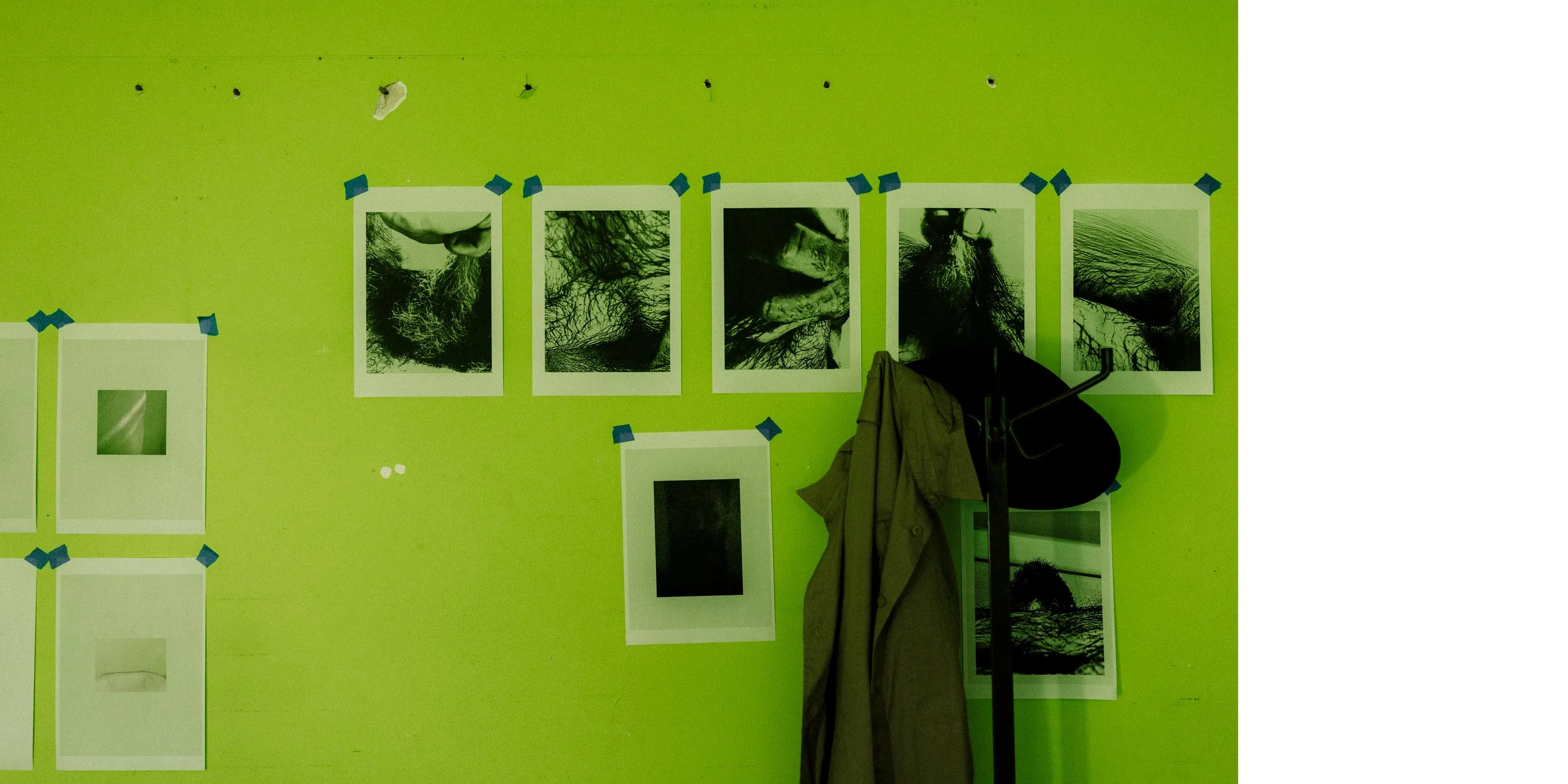
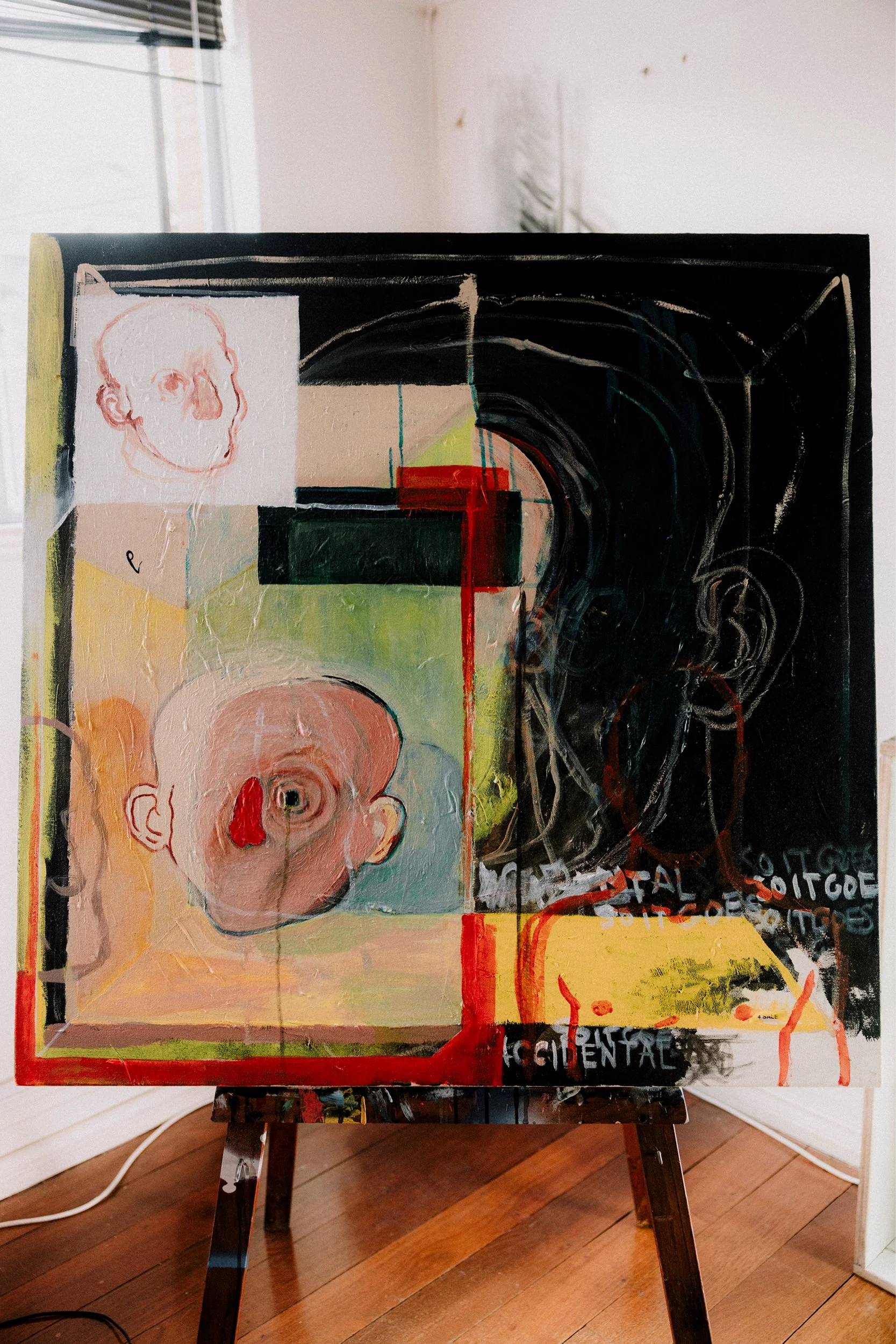
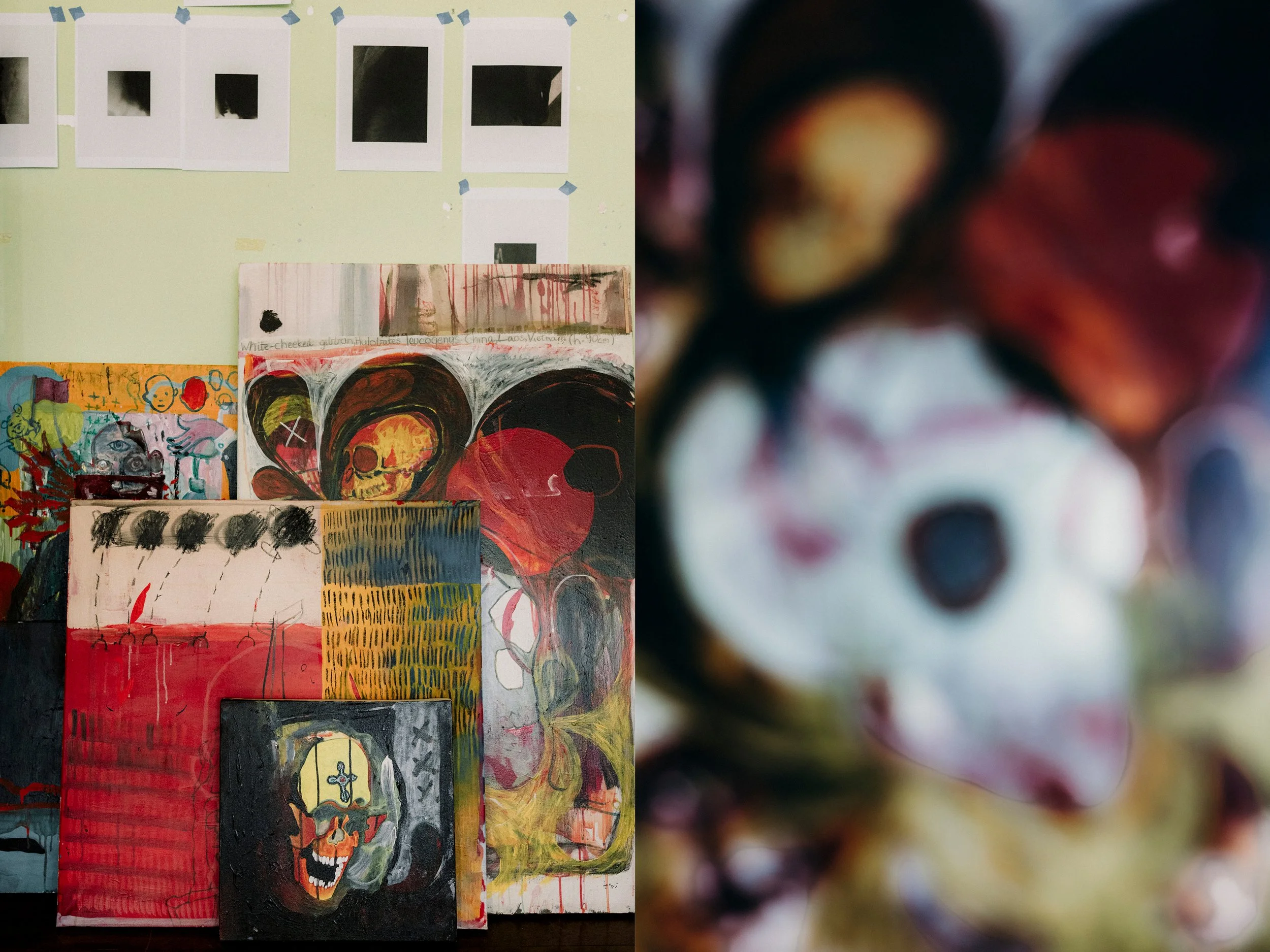
From there the photographs move through ‘the work’ itself.
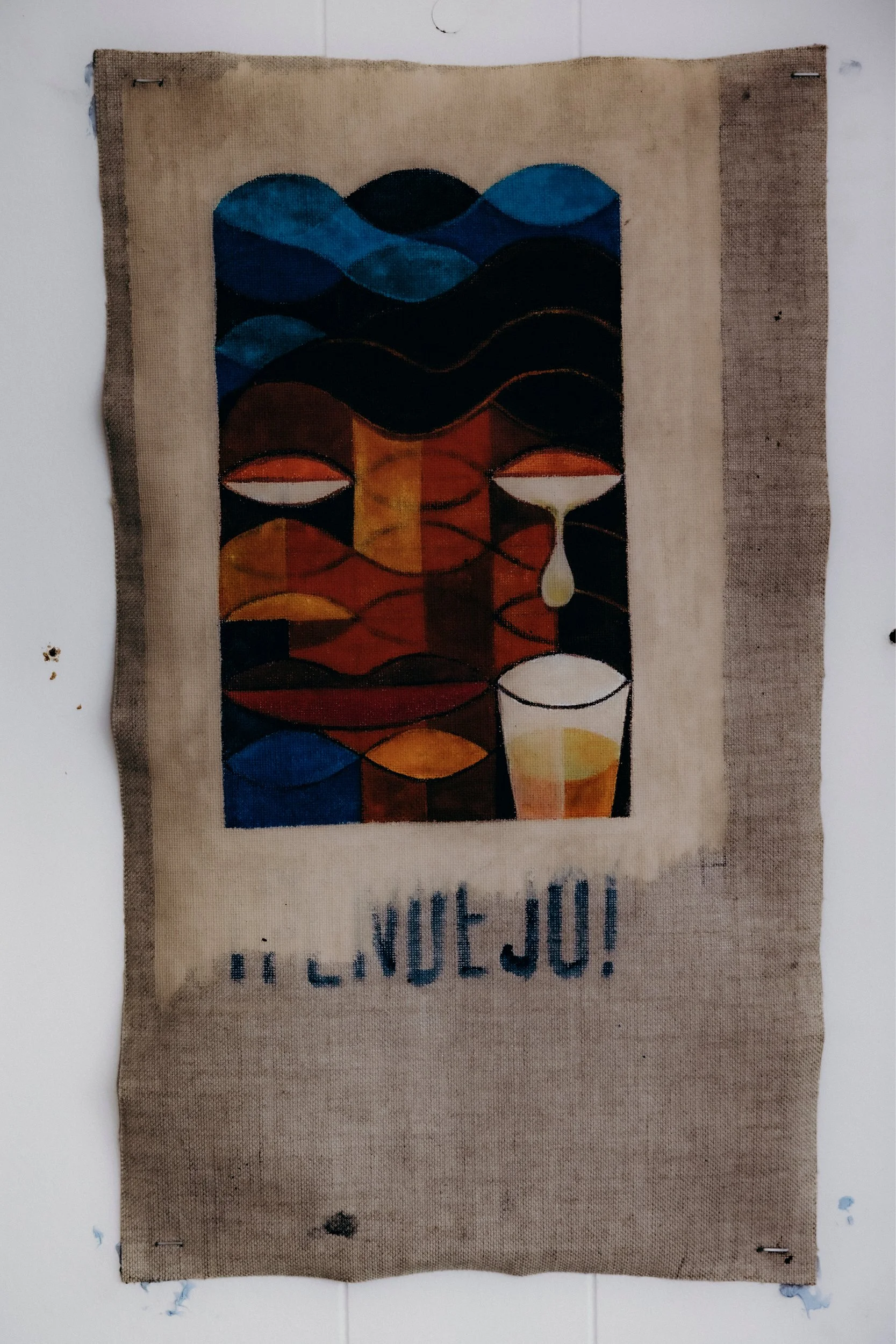
Fragments. Studies. Experiments. Dead ends. Projects circling questions of place—both external and internal.
It begins to feel like walking through a hall of self-identity mirrors.
Work grappling with the condition of middle-aged whitedom, where I am both subject and observer at once. Critic and specimen occupying the same frame.
Fragments of the project that has occupied much of my time in this space.
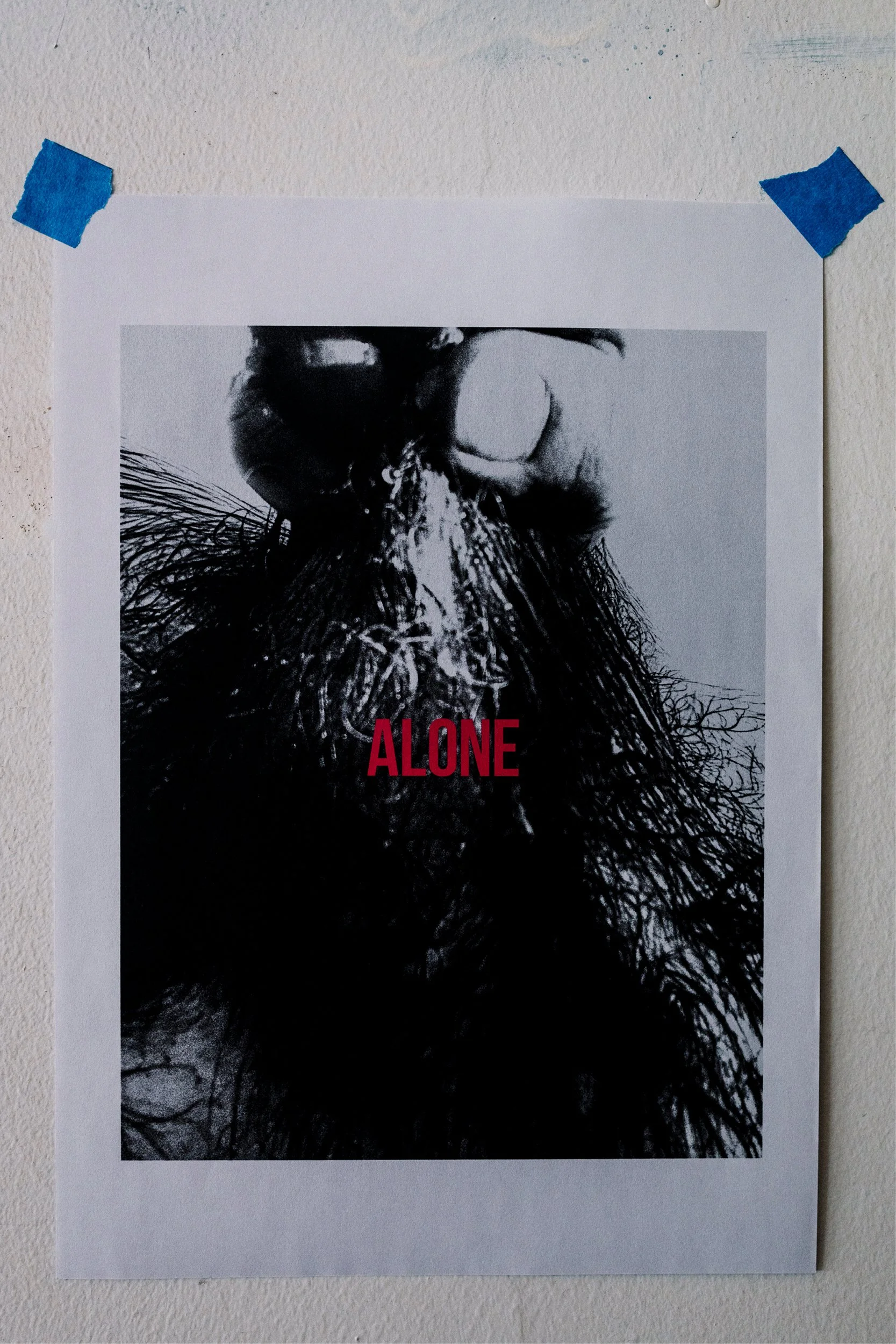
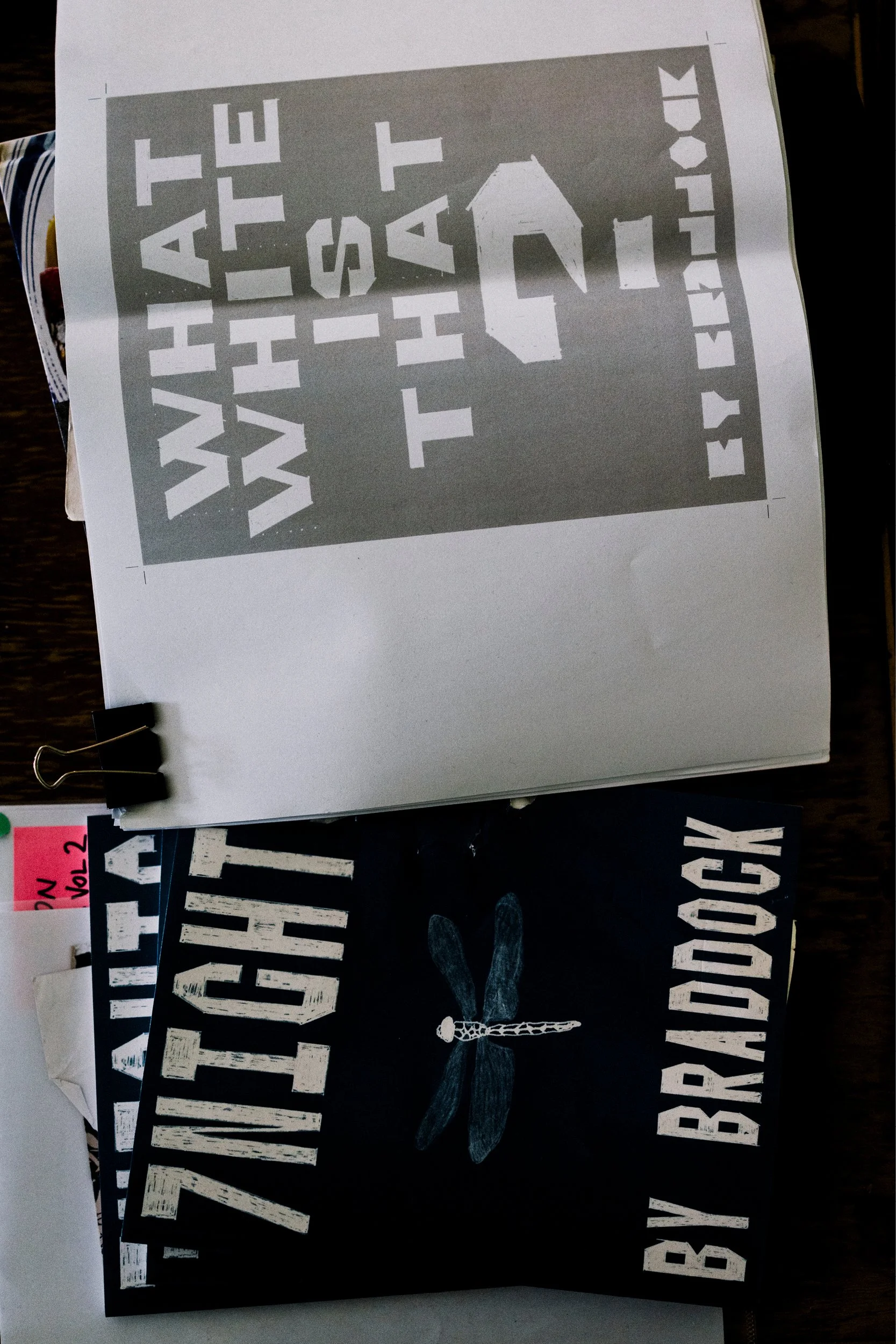
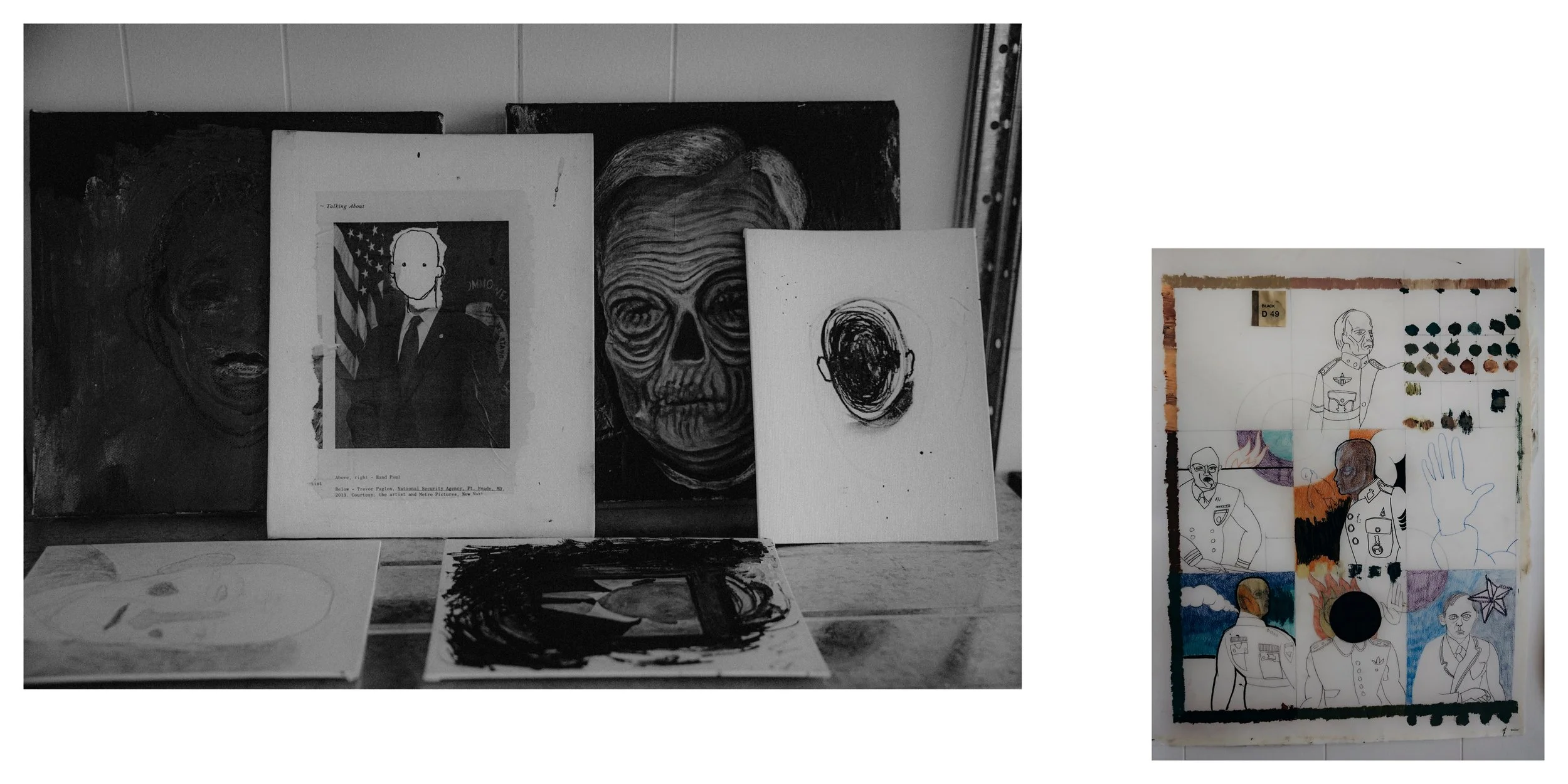
It is exploration.
But it is also something else.
What I began to recognise was something simpler—externalism used as a distraction from internalism.
All of it an attempt to answer the brief of not having a brief. An attempt to understand what creativity looks like when the creator has spent his adult life inside the feeding pen of commercial creativity.
When the subject has spent his life in the service of the culture he is attempting to critique.
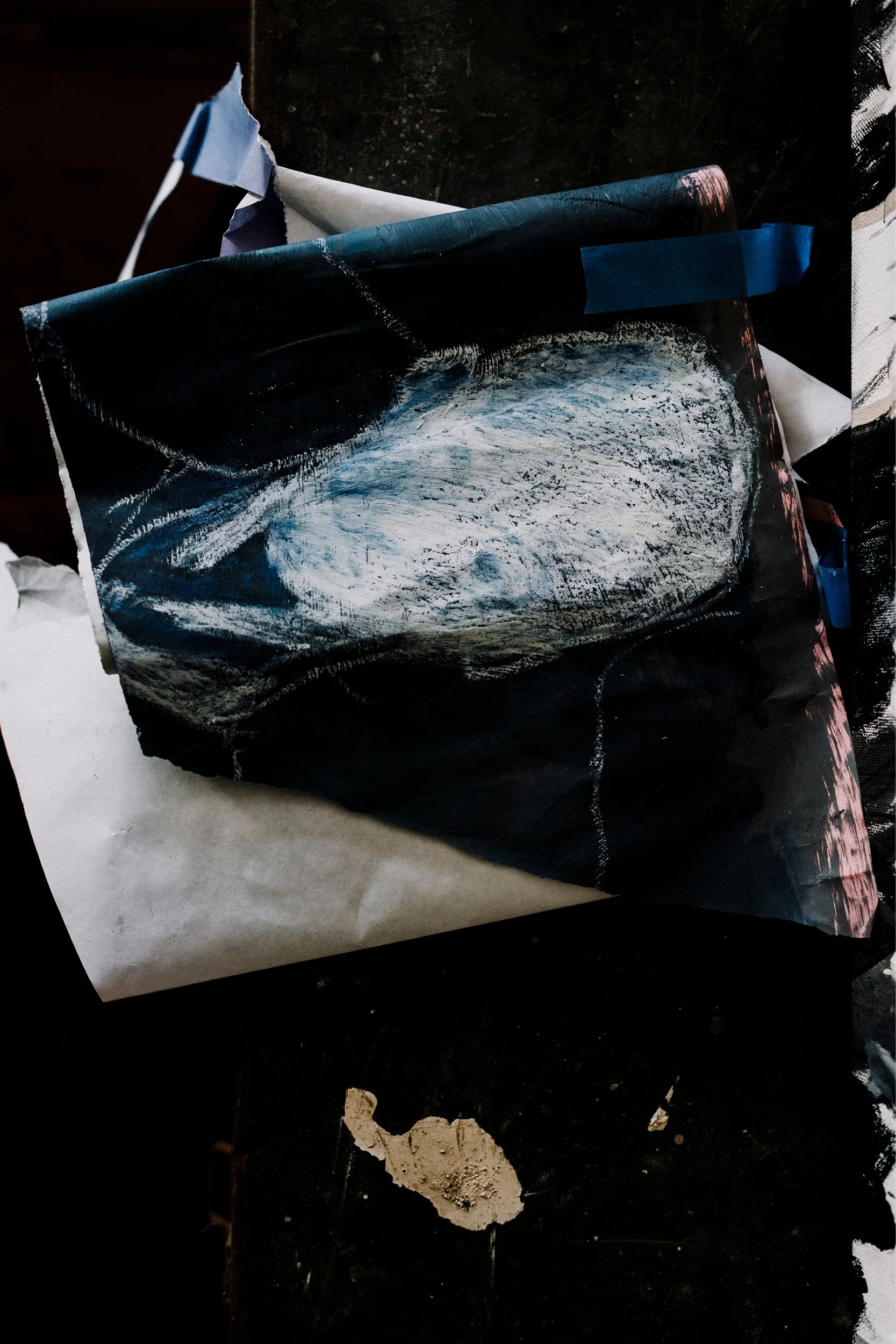
In the end I start to feel like a snake eating his own tail.
A system folding back over itself.
Could it ever be more than an act of self-indulgence?
Perhaps that is what art is—the attempt to say something meaningful, only to discover the search inevitably loops back to the self.
The Cabinet of Curiosities
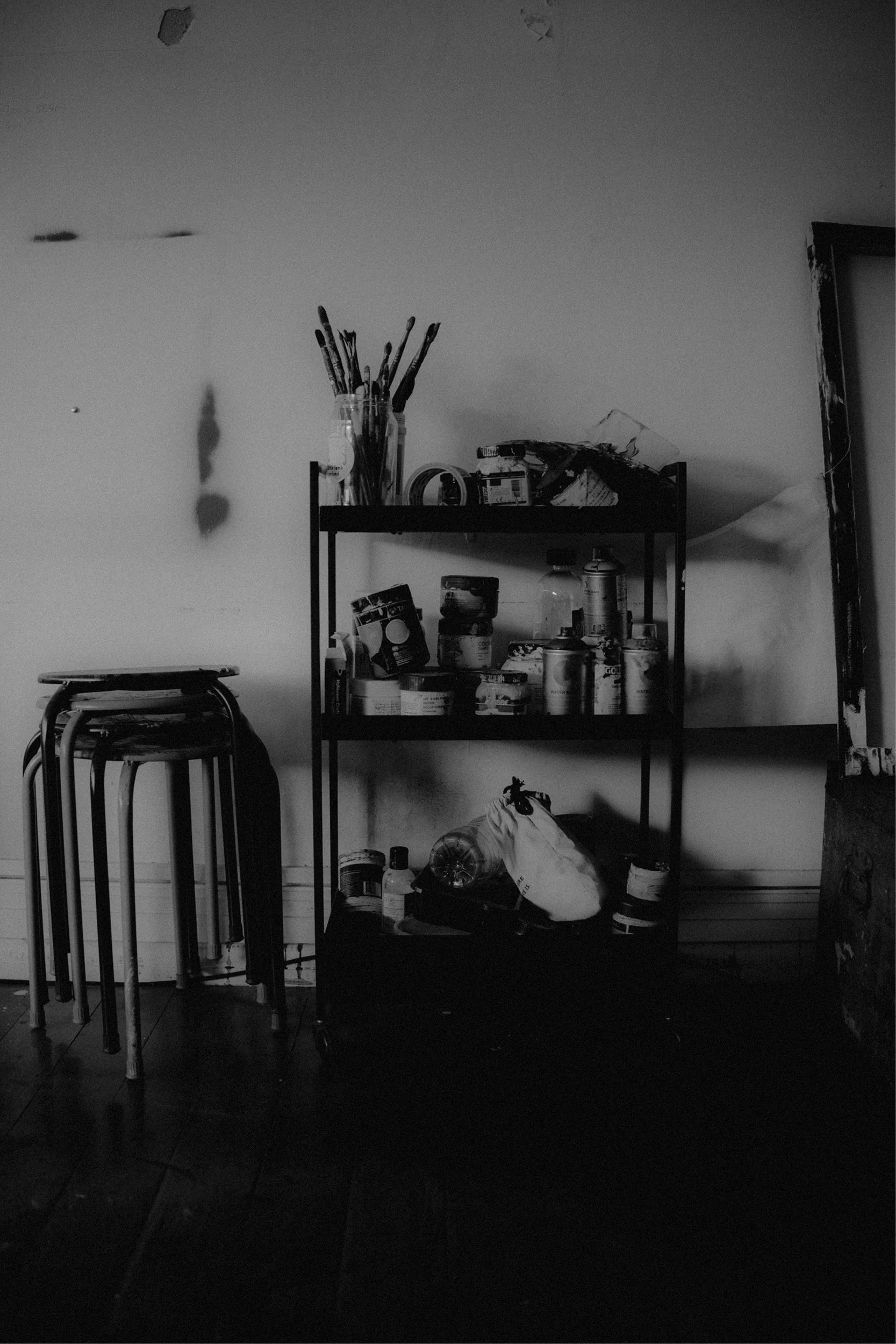
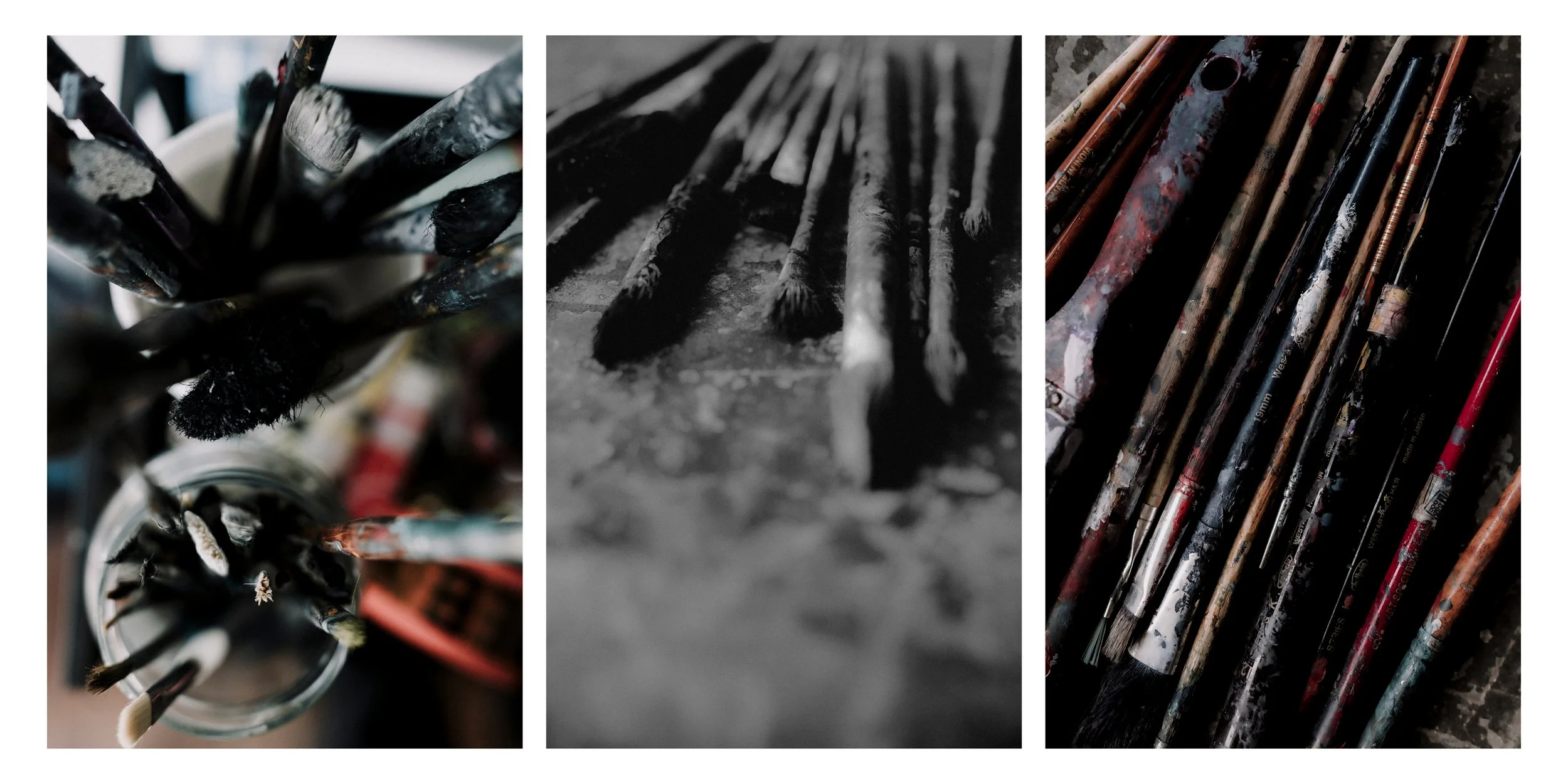
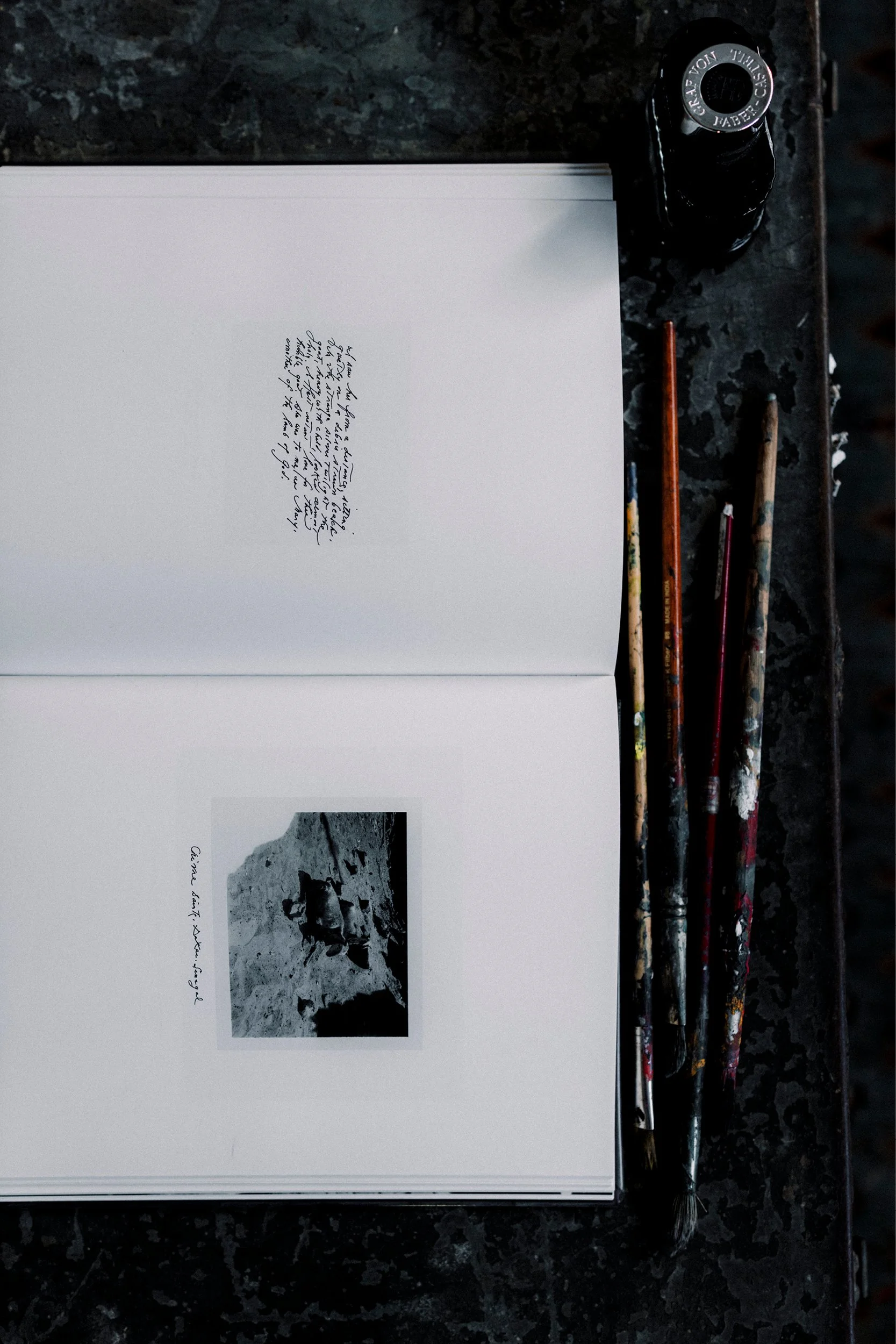
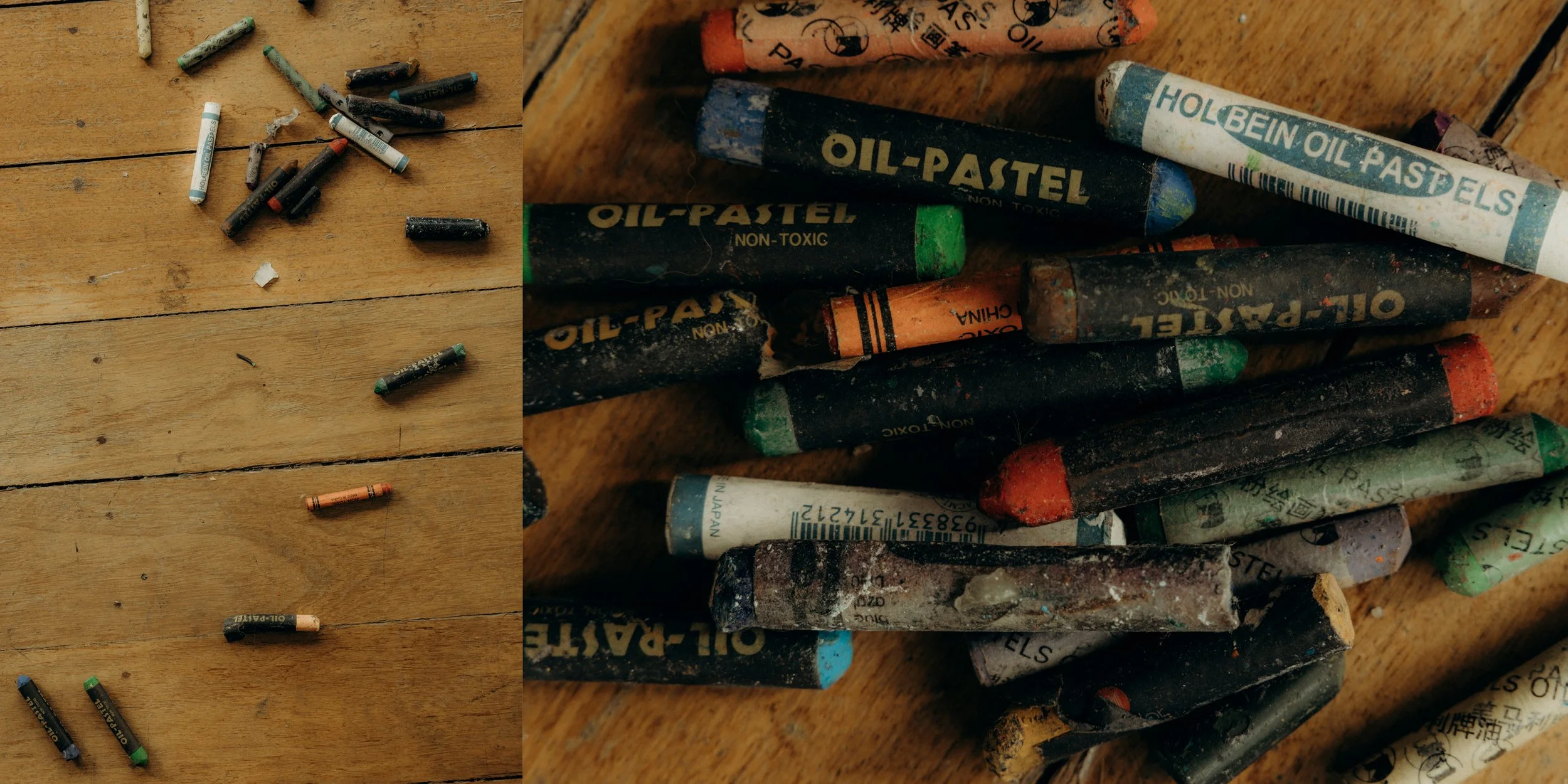
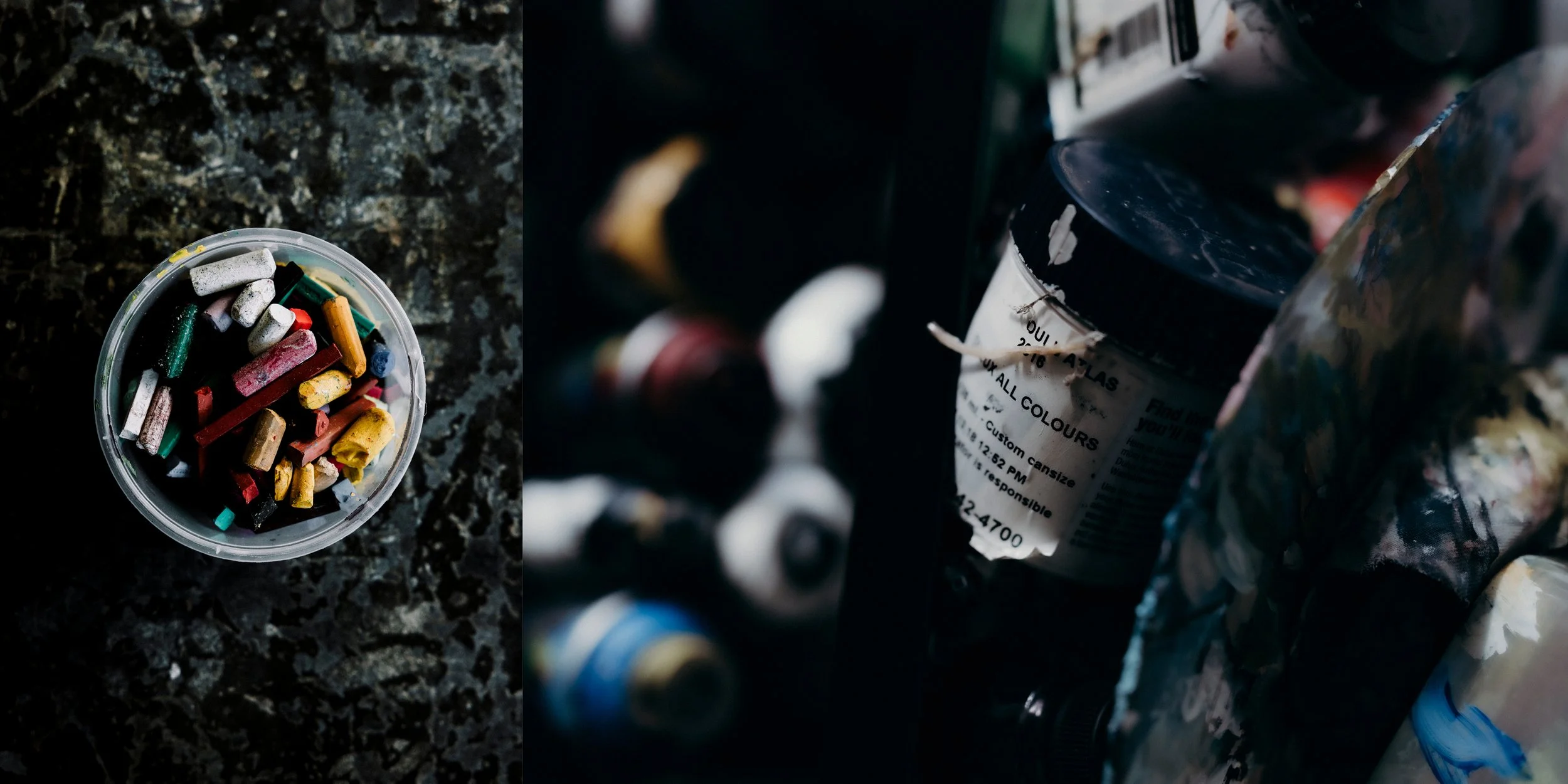
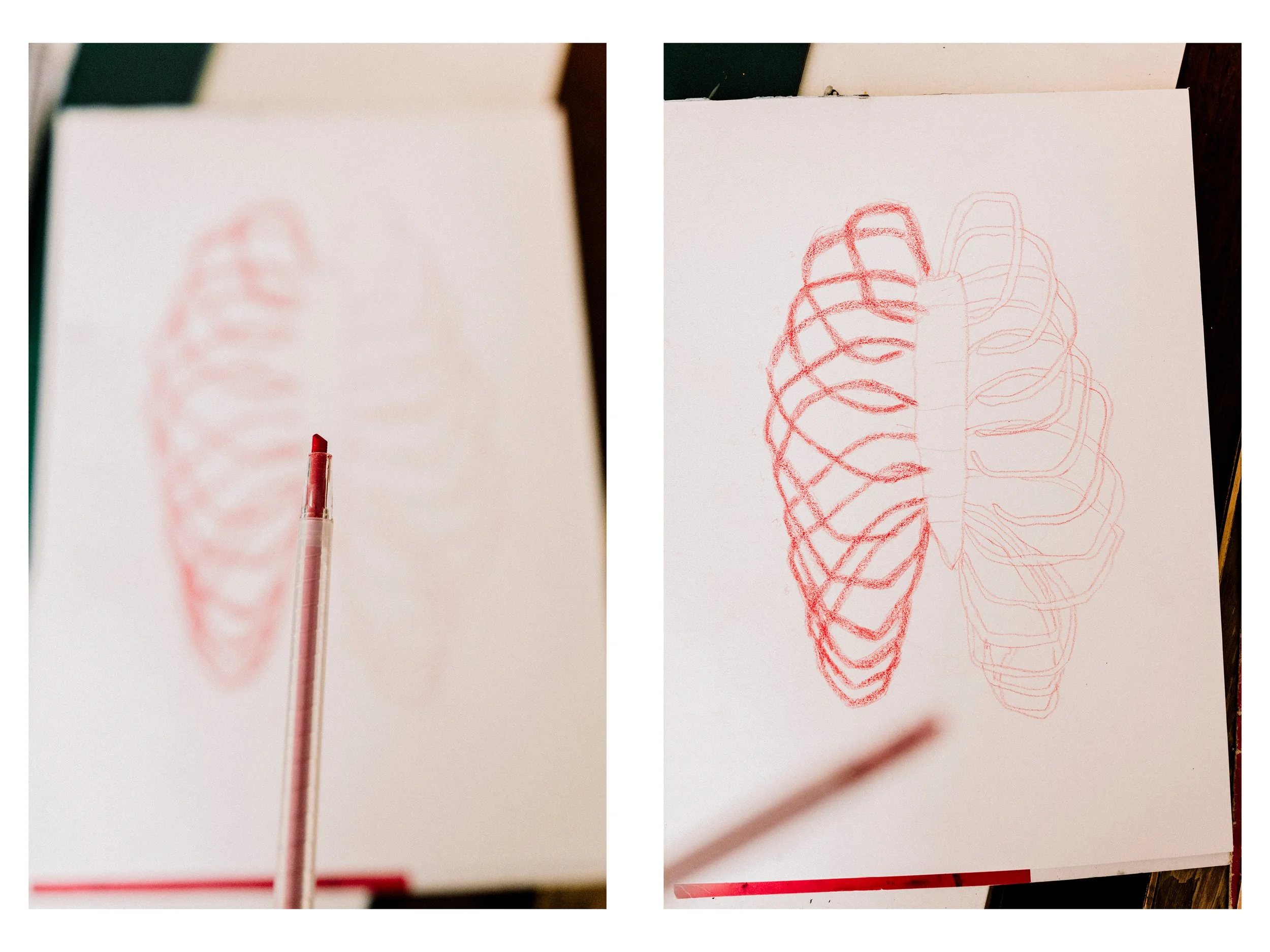
Then come the tools.
The pens. The pastels. The brushes. The paints.
The books. The pages where others have already found expression.
The writers, artists, and photogrphers whose work fills every available surface. These are the ones I measure myself against.
And always come up short.
What do they know that I don’t?
How did they make something of all this while I am still trying to work out what this even is?
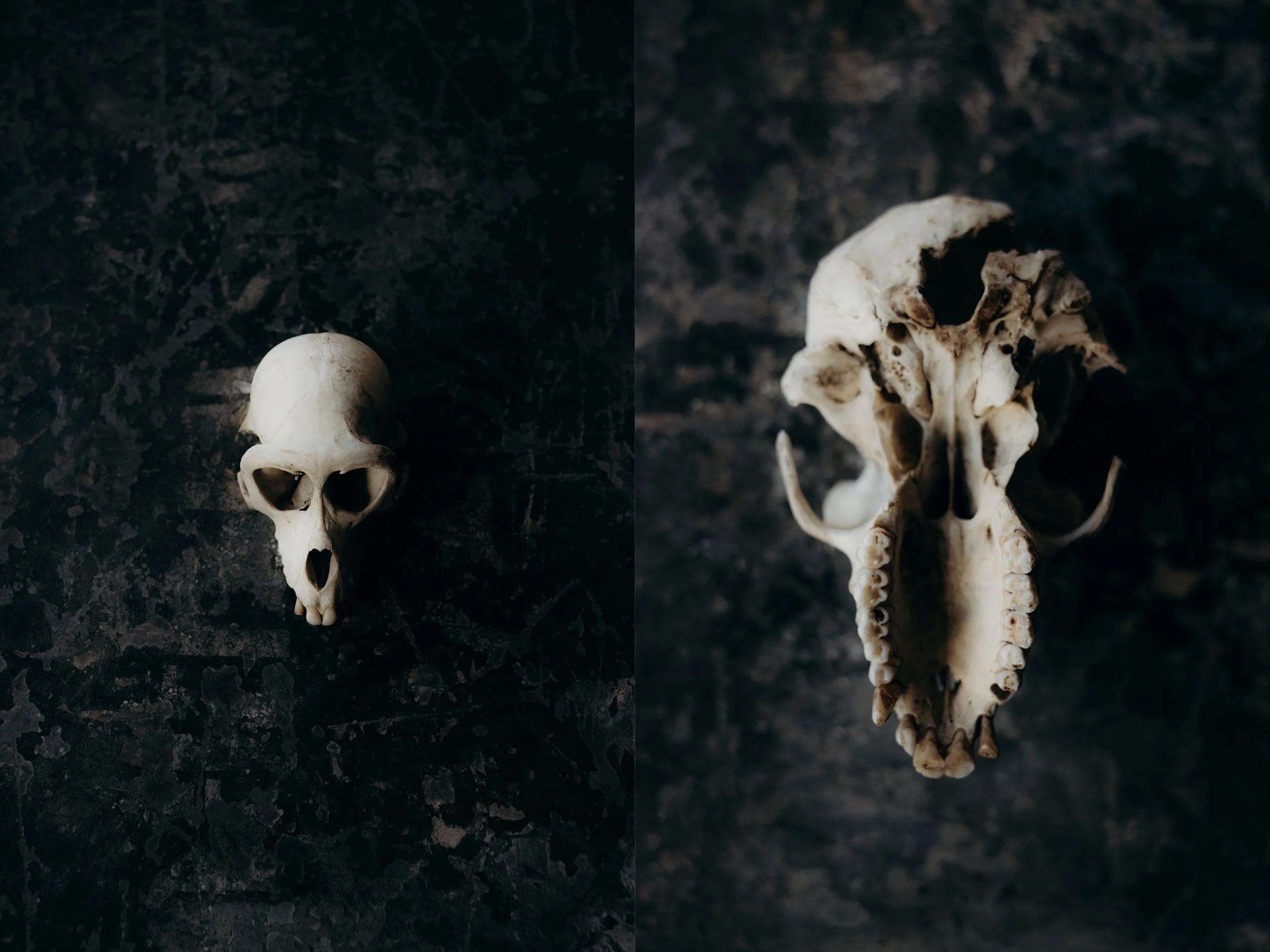
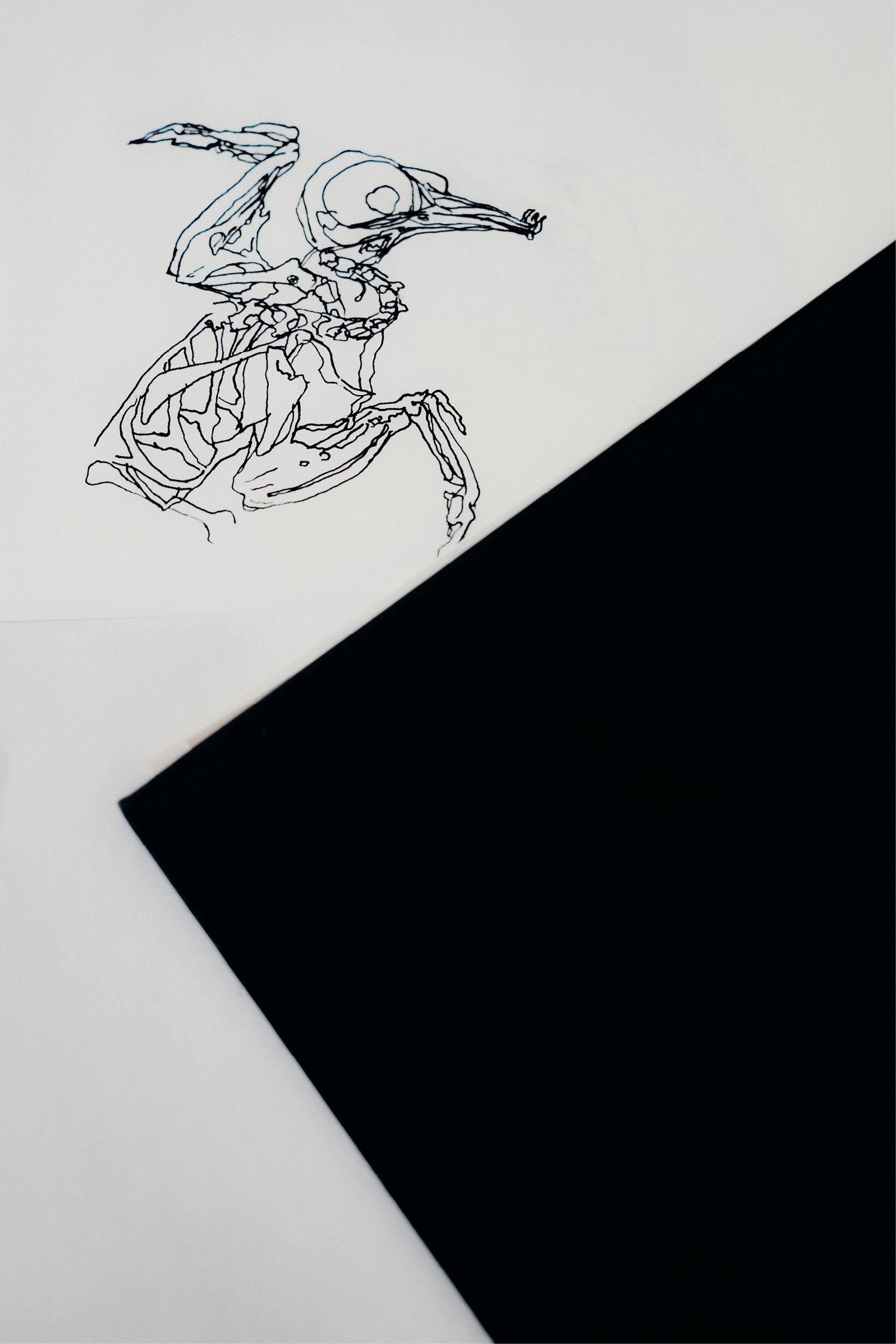
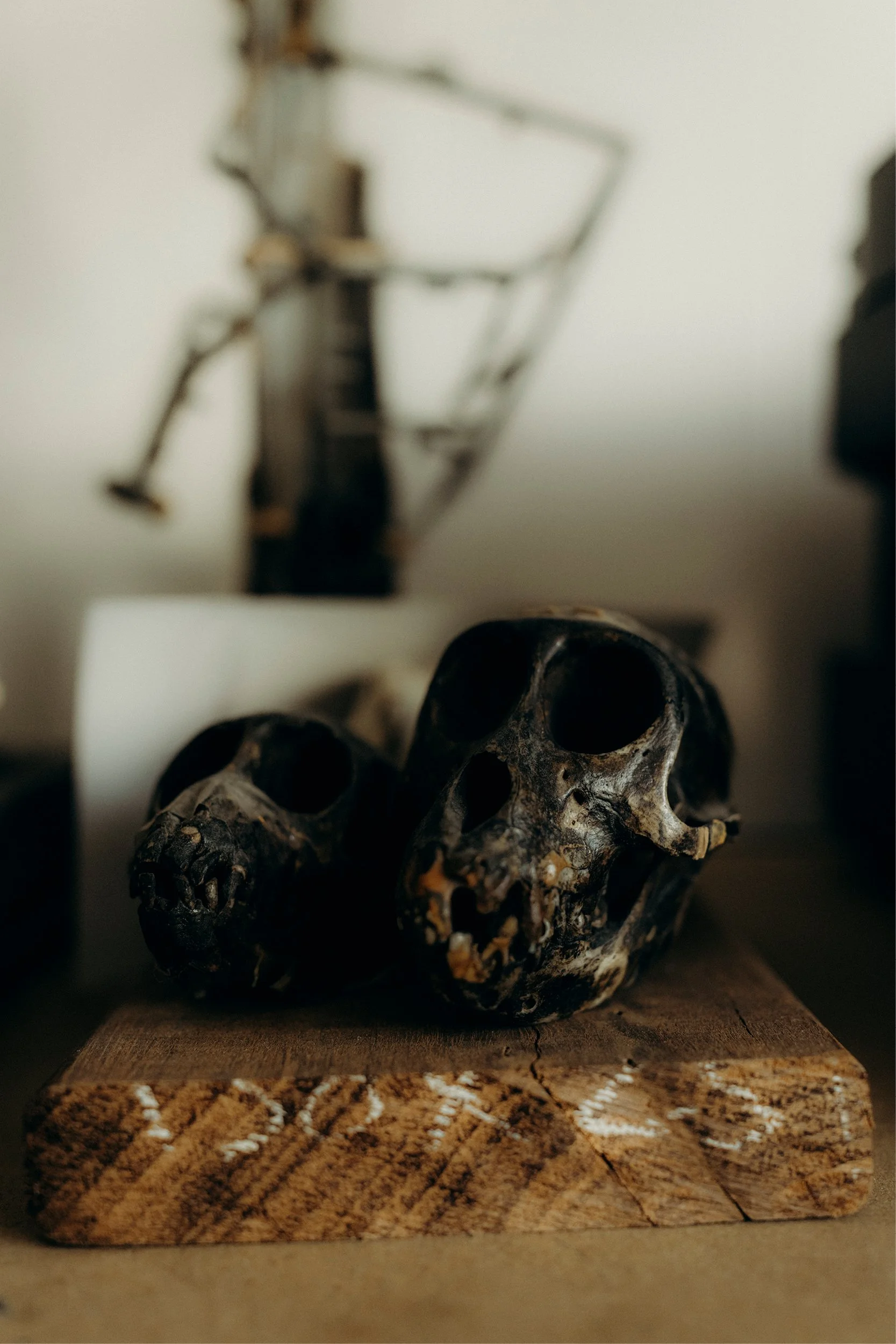
And then the skulls appear.
The skeletons.
The pivot from the external to the internal.
The jump cut to memento mori.
The quiet reminder that it all ends.
That every mark, every page, every project—all of it—may ultimately just be a slightly pathetic attempt at immortality.
Memento mori.
Or perhaps petite mort.
Books. Bones. Tools. Artefacts.
A cabinet of curiosities assembled in the hope that somewhere inside it a coherent life might reveal itself.
Evidence
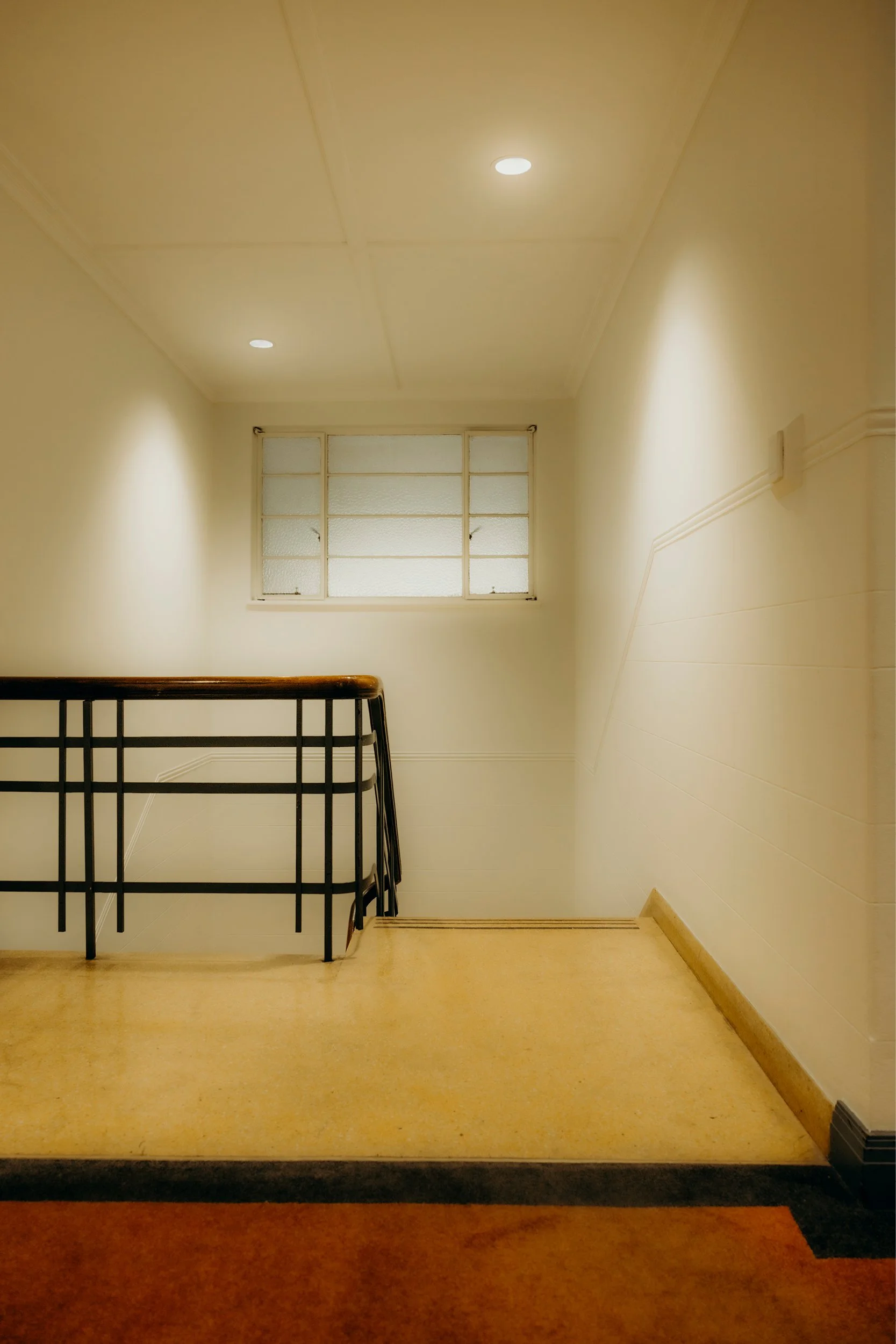
I had always assumed the studio was the place where I confronted myself.
Looking at Ryan Murphy’s photographs now, it seems more likely it was simply another place to hide.
Another project.
Another carefully constructed external world.
The photographs do not interpret the room.
They simply show it.
And in doing so they reveal the thing I had spent years avoiding.
The studio was never the revelation.
It was the evidence.
Evidence of a life spent constructing meaning from the outside in.
External artefacts.
External projects.
External identity.
Externalism.
All of it orbiting the one thing that remained largely untouched.
Internalism.
Perhaps that is the real story of this room.
Not a hero’s journey outward into the world and back again with wisdom.
But the opposite.
A life spent building outward structures—careers, projects, identities—only to arrive eventually back in the same place.
Standing in a room.
Surrounded by evidence.
Trying to understand what any of it meant.
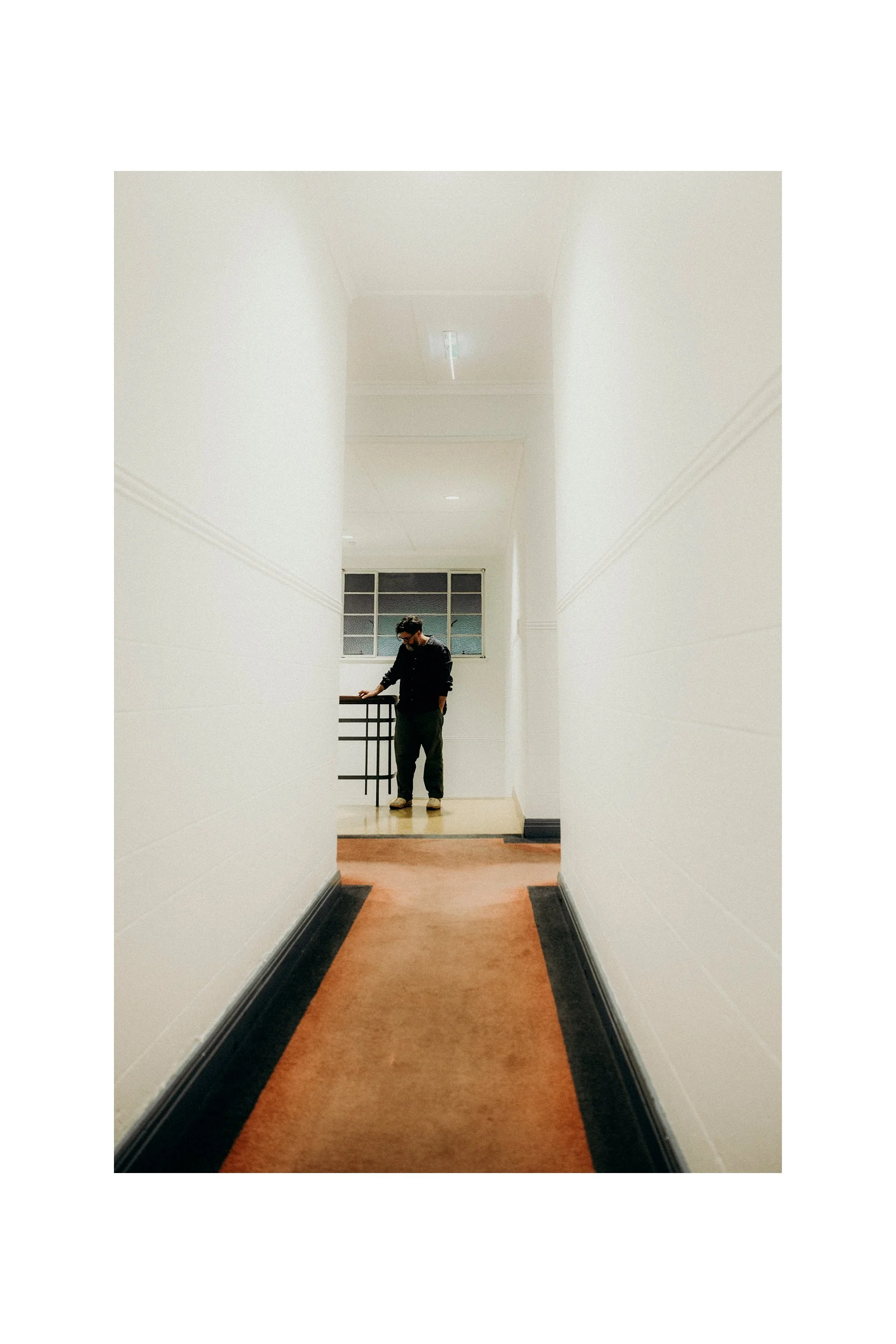
A photographer walked into a studio. A studio I thought belonged to me.
It turns out I was only ever a ghost in it.
And perhaps all of it—the studio, the work, the artefacts, the projects—is simply externalism used as a distraction from internalism.
Fade to black.